
by A. Einstein (1909)
Im Beitrag: "Wurde Albert EINSTEIN das Opfer der Wissenschaftler seiner Zeit?" wurde besonders hingewiesen auf folgende Veröffentlichung von Albert Einstein aus dem Jahre 1909:
"Über die Entwicklung unserer Anschauungen über das Wesen und die Konstitution der Strahlung". Diese Veröffentlichung liegt inzwischen auch in englischer Sprache im Internet vor, siehe nachstehend:
Den ganzen Beitrag lesen »
von Hans Jörg Fahr

Universum ohne Urknall. Kosmologie in der Kontroverse
Hans Jörg Fahr Spektrum Akademischer Verlag (Oktober 1995)
Amazon
Inhalt
Einleitung und Motivation zu diesem Buch:
Den ganzen Beitrag lesen »
von Percy Williams Bridgman

Das GOM-Projekt referiert stichwortartig in seiner Dokumentation drei Arbeiten vom Physik-Nobelpreisträger Percy Williams Bridgman:
1936 – The nature of physical theory (S. 72-92: Kap. 7: Relativity):
– Bridgman behandelt vor dem Hintergrund seiner Anerkennung für die Spezielle Relativitätstheorie hier nur die Allgemeine Relativitätstheorie. Für die Beurteilung einer „mathematical theory“ ist die Analyse des Textes ebenso wesentlich wie die Analyse der Gleichungen; denn der Text enthält das Nichtanalysierbare (unanalyzable) der Theorie und damit ihre wesentlichen Beschränkungen (S. 72).
Den ganzen Beitrag lesen »

by Dr. Wolfgang Engelhardt
Abstract
The Lorentz Transformation, which is considered as constitutive for the Special Relativity Theory, was invented by Voigt in 1887, adopted by Lorentz in 1904, and baptized by Poincaré in 1906. Einstein probably picked it up from Voigt directly.
Lesen Sie bitte hier weiter!

von Hartwig Thim (2010)
Johannes Kepler University, Linz, A-4040, AUSTRIA
e-mail: hartwig.thim@jku.at
Einstein’s Light Speed Postulate is Illogical
Einstein postulated in his 1905 article that light speed is isotropic in all inertial frames in order to derive the Lorentz Transformations. But the light speed postulate is logically wrong for the following reason: suppose, a short light pulse is emitted from a source mounted, say, in the origin of the coordinate system K, which is at rest.
Den ganzen Beitrag lesen »
von Celia Green
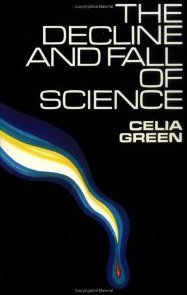
Das GOM-Projekt referiert stichwortartig in seiner Dokumentation
zwei Bücher von Celia Green:
The decline and fall of science
Celia Green
London: Hamish Hamilton; 1976
Amazon
Den ganzen Beitrag lesen »
by Nina B. Sotina and Nadia Lvov

The Ritz Ballistic Theory & Adjusting the Speed of Light to c near the Earth and Other Celestial Bodies
Vortrag vom 09.07.2011 bei der 18. Internationalen Konferenz der Natural Philosophy Alliance, College Park, Maryland, USA
Den ganzen Beitrag lesen »

von Walter Ritz
Recherches critiques sur l’électrodynamique générale
(Kritische Untersuchungen zur Allgemeinen Elektrodynamik)
Annales de Chimie et de Physique, Vol. 13, p. 145, Paris, 1908
aus dem Französischen von Carl Dürr, Verlag Dürr, Schweiz, 1991
Titelblatt und Inhaltsverzeichnis – Auszüge aus der deutschen Übersetzung:
Den ganzen Beitrag lesen »

© Paul Marmet (1932-2005)
List of Papers on Web Sites
Abstract.
When the velocity of light is measured with the Global Positioning System (GPS), we find that it is (c-v) or (c+v), in which v is the rotation velocity of the Earth where the cities are located. We know that the Lorentz transformations and special relativity are unable to provide a realistic physical explanation of the behavior of matter and light.
Den ganzen Beitrag lesen »
von Georg Galeczki

Das GOM-Projekt referiert stichworthartig in seiner Dokumentation zwei Arbeiten von Georg Galeczki:
The ultimate speed and Weber’s potential In: Physics essays. 6. 1993, Nr. 3, S. 448-450.
Ein Vergleich von Einsteins Spezieller Relativitätstheorie und der Ampère-Weber-Elektrodynamik hat ergeben: „In the STR [=special theory of relativity] the reason for an ultimate speed is that the mass of a body is a function of its velocity relative to an inertial“ (S. 448) observer, which is also reflected in the kinetic energy of the body …On the other hand, in the theory of Weber and in extensions of it, the reason for an ultimate speed is not a change in the kinetic energy, but a change in the potential energy …
Den ganzen Beitrag lesen »